
 Save
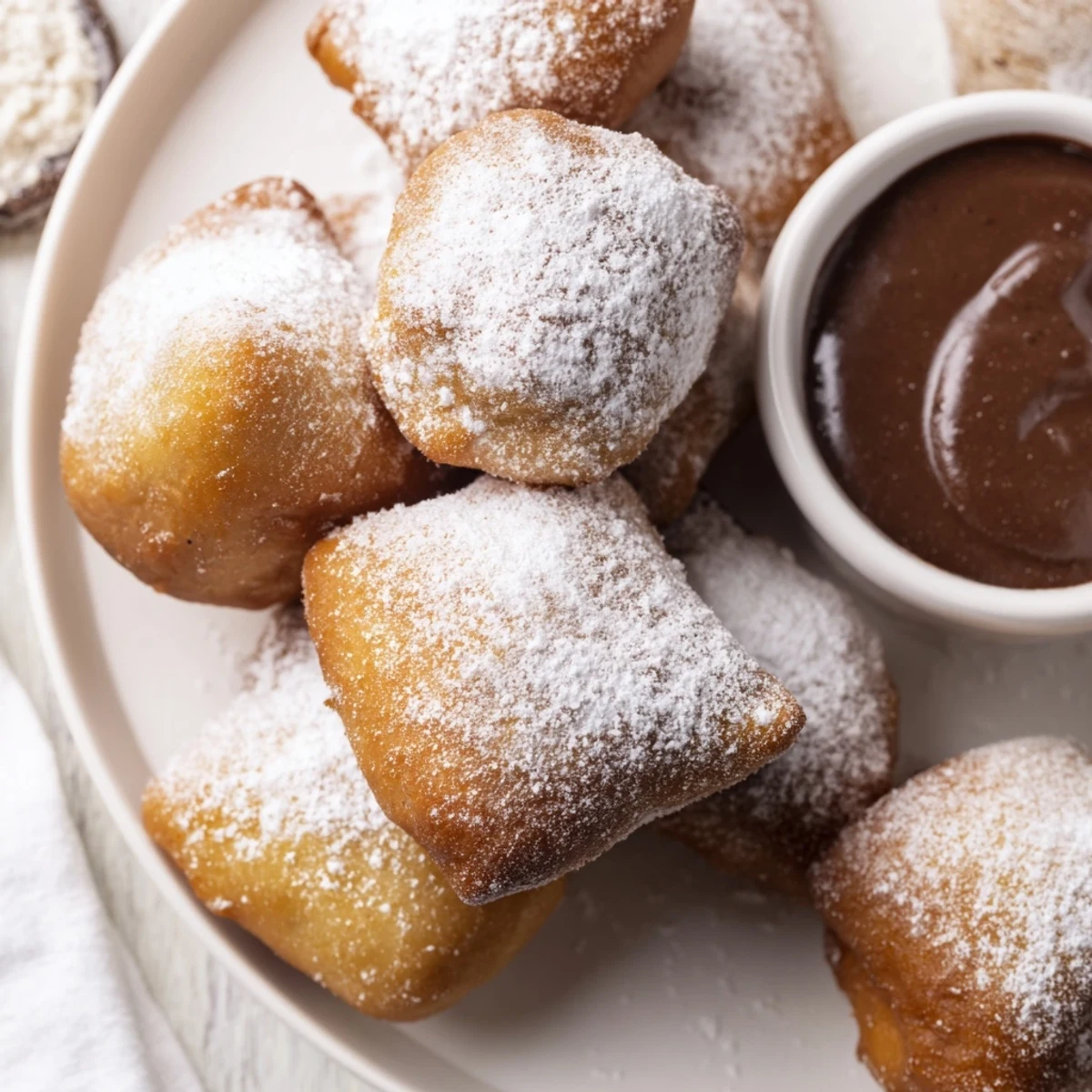
Save These Mardi Gras beignets feature a soft, pillowy dough deep-fried to golden perfection and generously dusted with powdered sugar. The accompanying chocolate sauce is luscious and smooth, made by gently melting semi-sweet chocolate with cream, butter, and vanilla to create a rich dipping accompaniment. The dough requires rising time but yields 24 pieces with a tender crumb and crispy exterior, perfect for sharing during festive celebrations.
Preparing the dough involves activating yeast in warm water, combining wet and dry ingredients, then kneading until smooth and elastic. After the rise, the dough is rolled, cut into squares, and fried until puffed. Serve warm with a dusting of sugar and alongside the indulgent chocolate sauce for a taste of New Orleans' favorite treat.
The first time I bit into a warm beignet in New Orleans, powdered sugar puffed up like a tiny delicious cloud around me. I stood there on Decatur Street with chocolate somehow smeared on my chin, completely understanding why people line up for these squares of fried happiness at dawn. That moment sparked a years-long mission to recreate that magic in my own kitchen, through many batches of dough that refused to rise and oil temperatures I guessed wrong about.
Last Mardi Gras, I made three batches back to back because my friends kept showing up with wine and laughter. My tiny apartment smelled like a carnival, oil popping gently on the stove while jazz played from a phone propped on a cookbook. We stood around the kitchen island, fingers sticky with chocolate and sugar, dunking still-warm beignets and forgetting entirely about the parade we had planned to watch.
Ingredients
- Active dry yeast: Use fresh yeast and check the expiration date, old yeast is the number one reason beignets stay flat
- Warm water: Test it on your wrist like baby formula, too hot kills the yeast and too cold makes it sleepy
- Whole milk: Room temperature milk blends better than cold, which can shock the dough
- All-purpose flour: Measure by spooning into your measuring cup and leveling off, packing down too much flour makes tough beignets
- Unsalted butter: Melt it completely before adding so it distributes evenly through the dough
- Semi-sweet chocolate: Chop it into small pieces so it melts faster and more smoothly
- Heavy cream: Room temperature cream prevents the chocolate from seizing when you combine them
Instructions
- Wake up the yeast:
- Dissolve the yeast in warm water with a pinch of sugar and watch for foam, this tells you the yeast is alive and ready to work
- Make the dough base:
- Stir in the remaining sugar, milk, egg, and salt, then add two cups of flour to create a shaggy mixture
- Add butter and remaining flour:
- Pour in the melted butter, then gradually add the rest of the flour until a soft dough forms that pulls away from the bowl
- Knead until smooth:
- Turn onto a floured surface and knead for 5 to 7 minutes, the dough should feel like your earlobe when it is ready
- Let it rise:
- Place in a greased bowl, cover, and find a warm spot for about 1 hour until it has doubled in size
- Roll and cut:
- Roll to half-inch thickness and cut into 2-inch squares, a pizza cutter works perfectly for this job
- Heat the oil:
- Heat 2 inches of oil to 350°F, an instant thermometer takes all the guesswork out of getting perfect golden beignets
- Fry to golden perfection:
- Cook in batches for 1 to 2 minutes per side until puffed and beautifully browned, do not crowd the pot or the oil temperature will drop
- Dust and serve:
- Drain on paper towels and immediately coat with powdered sugar while still warm, this is when the sugar sticks best
- Make the chocolate sauce:
- Warm the cream and butter over low heat, add chocolate and stir until smooth, then finish with vanilla and salt
 Save
Save My niece accidentally dropped a beignet into the chocolate sauce once and declared it the best mistake ever. Now that is exactly how I serve them at my house, half-dipped and completely wonderful.
The Secret to Pillowy Texture
Do not skip the kneading step, but do not overdo it either. Five to seven minutes of gentle kneading develops just enough gluten for structure while keeping the beignets tender and light.
Frying Without Fear
Keep a splatter screen handy if you have one, and never walk away from hot oil. The oil will bubble up enthusiastically when you add the dough, this is completely normal and part of the fun.
Make Ahead Magic
The dough actually develops more flavor when it rises overnight in the refrigerator. Let it come to room temperature for 30 minutes before rolling and frying.
- Keep the powdered sugar in a sieve for easy, even dusting
- The chocolate sauce can be made ahead and gently reheated
- Room temperature ingredients mix more smoothly than cold ones
 Save
Save There is something deeply joyful about standing over a pot of frying dough, watching these golden squares puff up like edible clouds. I hope your kitchen fills with as much laughter and powdered sugar as mine always does.
Recipe FAQs
- → What type of flour is best for beignets?
-
All-purpose flour works well to create a tender yet slightly chewy texture ideal for beignets.
- → How do I know when the oil is ready for frying?
-
Heat the oil to around 350°F (175°C); you can test by dropping a small piece of dough—if it bubbles and rises quickly, the oil is ready.
- → Can the dough be prepared ahead of time?
-
Yes, the dough can be mixed and left to rise overnight in the refrigerator, which enhances flavor and makes frying easier the next day.
- → What is the best way to store leftover beignets?
-
Beignets are best enjoyed fresh but can be kept in an airtight container at room temperature for up to a day; reheat briefly before serving.
- → How do I achieve a smooth chocolate sauce?
-
Gently heat cream and butter before adding chopped chocolate, stirring constantly until fully melted; avoid overheating to prevent separation.
- → Can I substitute any ingredients to make this dairy-free?
-
Substitute milk, butter, and cream with plant-based alternatives like almond milk and vegan butter to accommodate dairy-free preferences.