
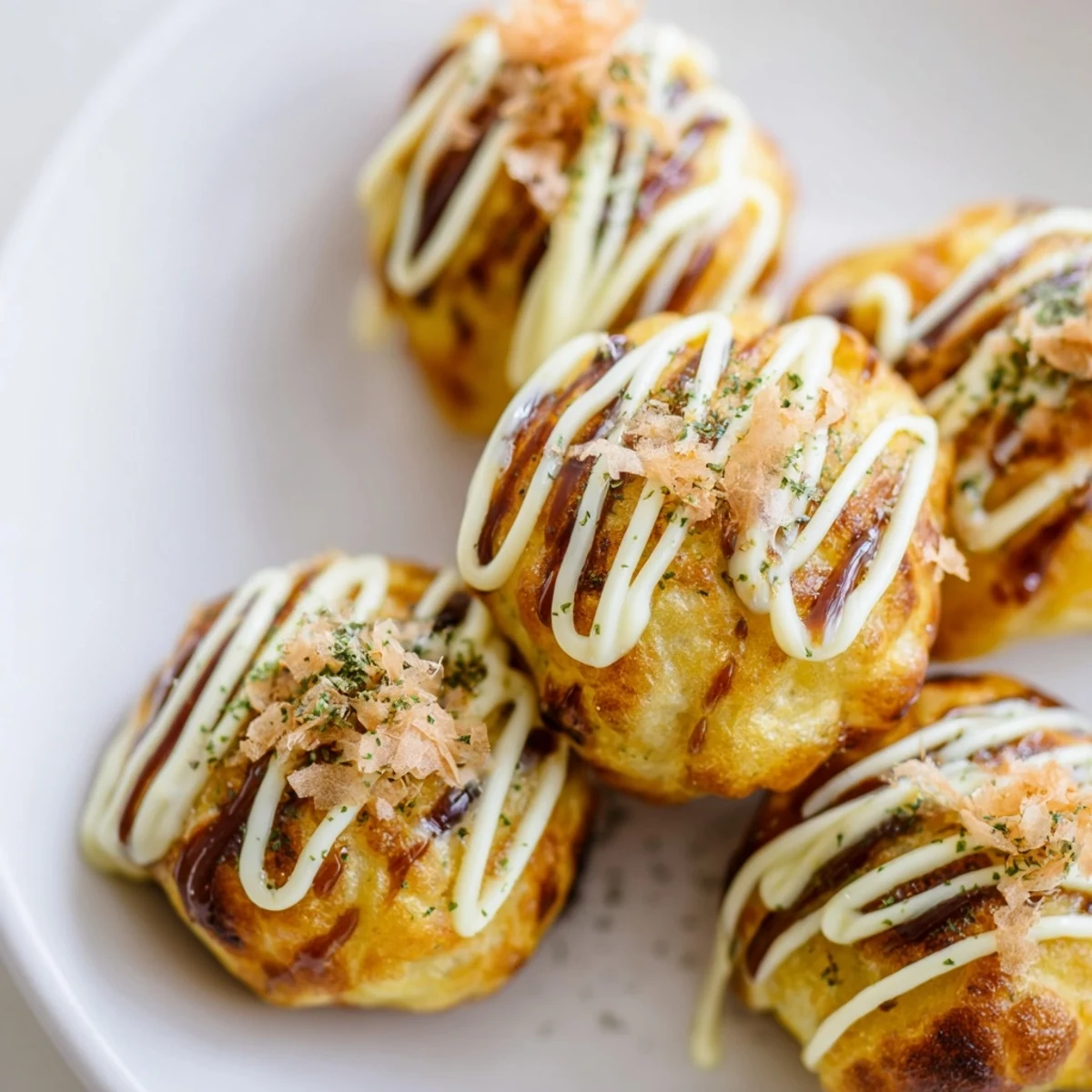
 Save
Save Create these beloved Japanese street food favorites right in your kitchen. Golden-brown, crispy exterior gives way to a soft, savory center filled with tender octopus chunks, crunchy tenkasu, pickled ginger, and fresh green onions. The classic toppings of takoyaki sauce, creamy Japanese mayonnaise, aonori seaweed, and smoky bonito flakes create that perfect sweet and savory balance. While traditionally made in a special pan, you can use an aebleskiver pan as a handy substitute. Best enjoyed immediately while the exterior remains crisp and the filling stays warm and pillowy.
The first time I ate takoyaki was at a tiny street stall in Osaka during a light rain. I watched the vendor's hands move like lightning, turning the sizzling balls with practiced precision while steam rose around him. When I bit into that first piping hot sphere, the contrast between the crisp exterior and the soft, custardy center absolutely floored me. Now I make them at home whenever the craving hits, though my turning technique still needs work.
Last winter my neighbor came over for what I called a takoyaki experiment night. We crowded around the pan, beers in hand, taking turns with the skewers and laughing when half the balls ended up slightly lopsided. They disappeared almost as fast as we could make them, proving that imperfect homemade takoyaki beats restaurant takeout any day of the week.
Ingredients
- 1 cup all-purpose flour: Forms the foundation of that silky smooth batter that creates the perfect interior texture
- 2 large eggs: Essential for structure and richness in the batter
- 2 cups dashi stock: Provides that authentic umami depth that water simply cannot replicate
- 1/2 tsp soy sauce: Adds a subtle savory background note
- 1/2 tsp salt: Enhances all the flavors without overpowering
- 120 g cooked octopus: The traditional tender heart of each takoyaki ball
- 1/4 cup tenkasu: These crunchy tempura scraps add incredible texture throughout
- 2 tbsp pickled red ginger: Brings bright tangy notes that cut through the richness
- 2 green onions: Fresh onion flavor balances the heavier elements
- Takoyaki sauce: That sweet and savory glaze that makes takoyaki instantly recognizable
- Japanese mayonnaise: Creamy and tangy, creates the classic stripe pattern on top
- Aonori: Dried seaweed flakes add ocean aroma and visual appeal
- Katsuobushi: Bonito flakes that dance and curl from the heat like magic
Instructions
- Whisk your batter until silky smooth:
- Combine the flour, eggs, dashi stock, soy sauce, and salt in a bowl, whisking until no lumps remain and the mixture flows freely like heavy cream.
- Get your pan ready:
- Preheat your takoyaki pan over medium heat, then brush each well with oil until it shimmers slightly.
- Pour and fill each well:
- Pour batter directly into each well, filling completely to the top level.
- Add your treasure inside:
- Drop a piece of octopus, some tenkasu, pickled ginger, and green onion into each batter-filled well.
- Wait for the edges to set:
- Let them cook undisturbed for 1 to 2 minutes until you can see the edges starting to firm up and turn golden.
- The first turn:
- Use skewers or chopsticks to quickly turn each ball 90 degrees, letting the uncooked batter spill out and start forming the round shape.
- Keep them rolling:
- Continue turning every 1 to 2 minutes until all sides are deeply golden and crisp to the touch, about 8 to 10 minutes total.
- Finish with flair:
- Transfer to plates, drizzle with takoyaki sauce and mayonnaise in a zigzag pattern, then sprinkle with aonori and bonito flakes.
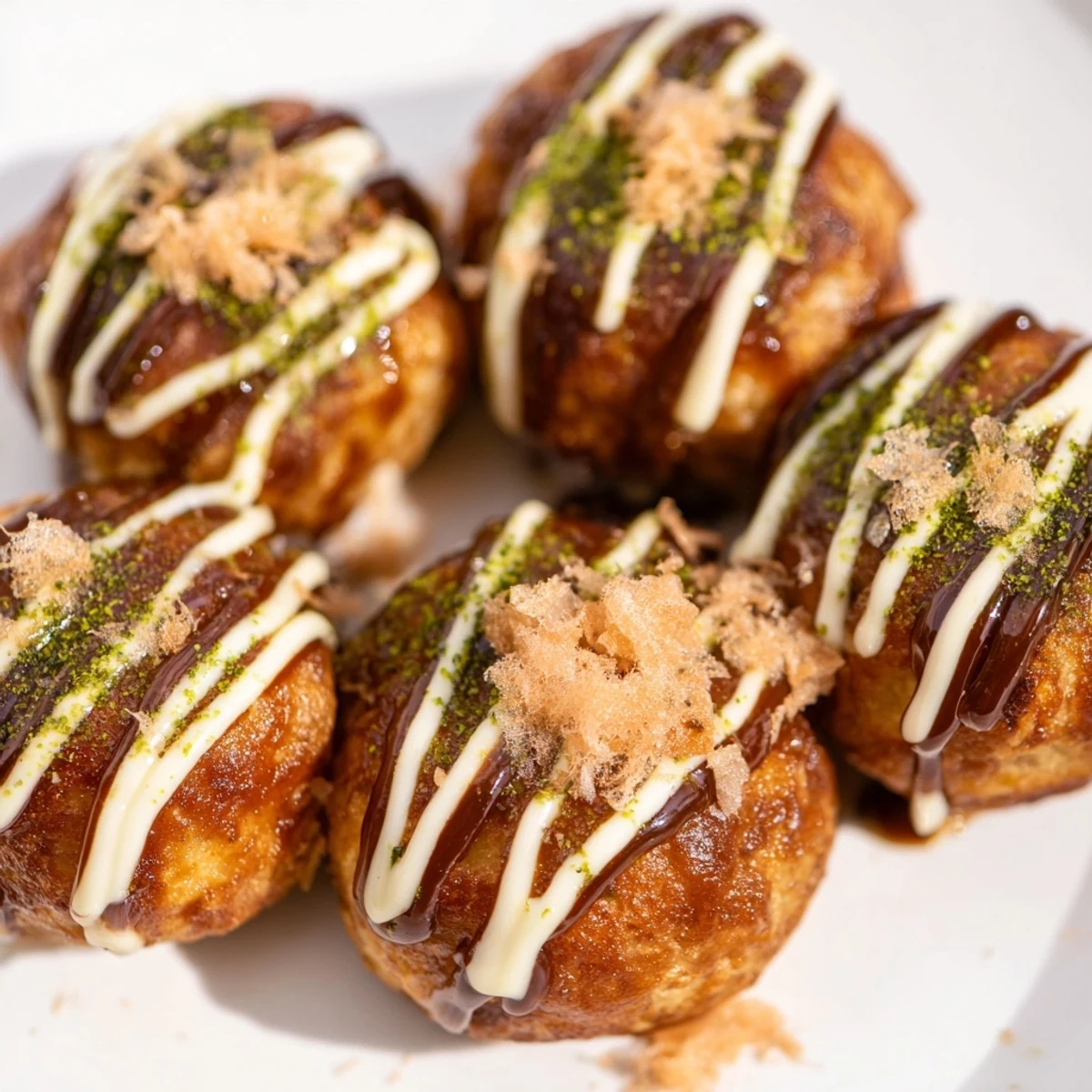 Save
Save Something magical happens when you serve takoyaki at a gathering. People instinctively pull up chairs to watch the bonito flakes flutter and curl in the steam, suddenly everyone is animated and engaged. Food becomes entertainment and connection all at once.
Getting the Right Equipment
A traditional cast iron takoyaki pan distributes heat beautifully and helps achieve that restaurant quality crispness. If you cannot find one, an aebleskiver pan works surprisingly well with similar half sphere molds. The key is getting good heat contact on all sides.
Making It Your Own
While octopus is classic, cooked shrimp or even cubed mozzarella make excellent filling variations. Some people add small cubes of cooked bacon or corn for unexpected flavor twists. The batter method remains exactly the same.
Perfecting Your Technique
The turning motion becomes intuitive after you have made a few dozen of these. Start with a gentle skewer poke at the edge, then quickly flip and rotate. Work in a circular pattern around the pan rather than trying to turn them all at once.
- Keep a small bowl of oil nearby to re grease wells between batches
- Pour any leftover batter into a separate container rather than back into the main bowl
- Have your toppings ready before you start cooking since they go on immediately
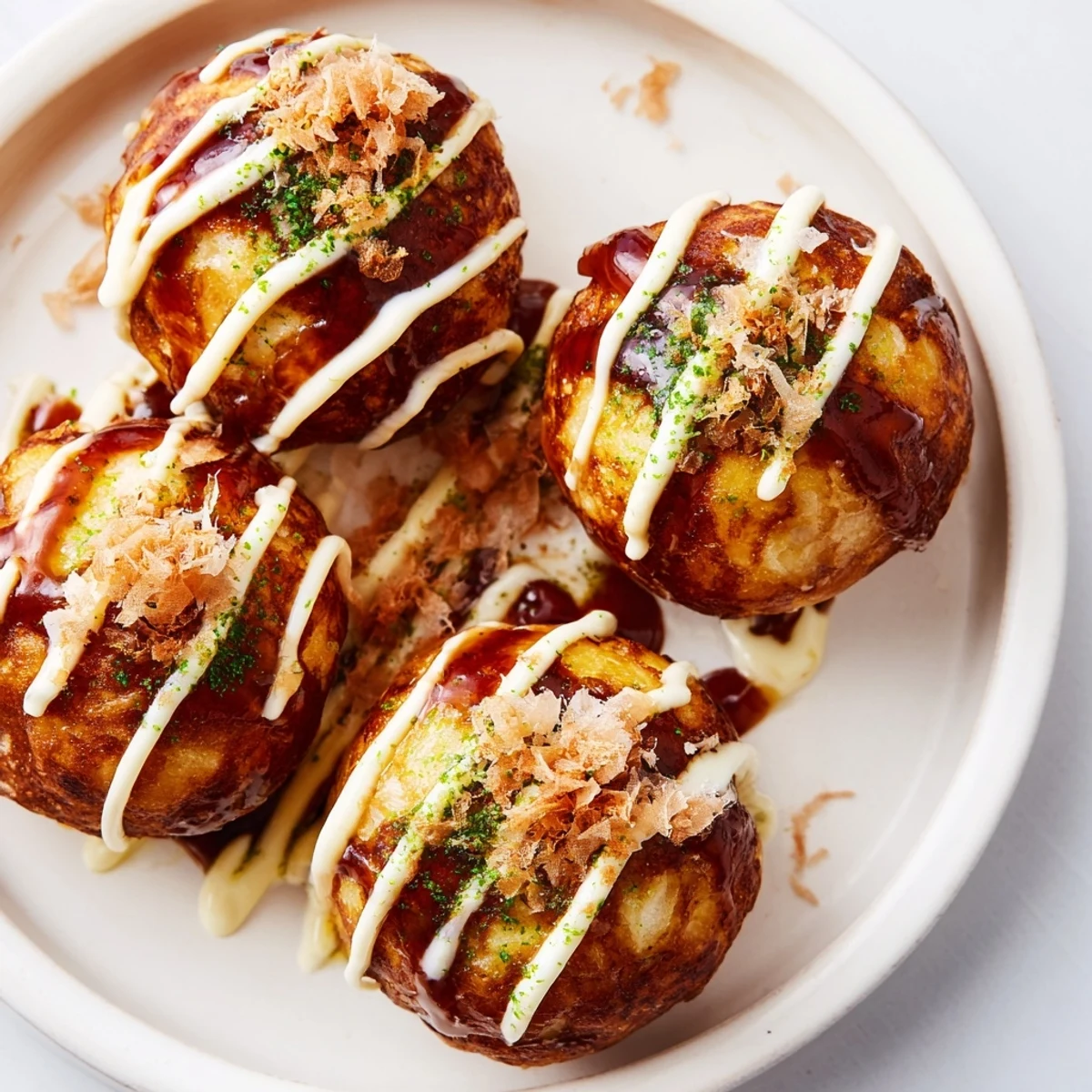 Save
Save There is something deeply satisfying about mastering a skill that looked impossible when you first watched it being done. Every perfectly round takoyaki feels like a tiny victory worth celebrating.
Recipe FAQs
- → What is takoyaki?
-
Takoyaki are beloved Japanese street food consisting of spherical, battered treats filled with diced octopus, tempura scraps, pickled ginger, and green onion. They're cooked in special molded pans until golden and crispy outside with a soft, creamy interior.
- → Can I make takoyaki without a special pan?
-
Yes! While a traditional takoyaki pan works best, you can use an aebleskiver pan or cake pop maker as excellent alternatives. These pans have similar half-sphere molds that allow you to achieve that characteristic round shape.
- → What can I substitute for octopus?
-
If you prefer not to use octopus, cooked shrimp works beautifully as a pescatarian alternative. For a vegetarian version, try using small mushroom pieces or cubed tofu. Both options absorb the flavorful batter well.
- → How do I get that perfect round shape?
-
The key is patience and technique. Once the edges begin to set, use skewers or chopsticks to turn each ball 90 degrees, letting uncooked batter flow out and form new sections. Continue turning every minute or two until uniformly golden and spherical.
- → What's the best way to serve takoyaki?
-
Serve immediately after cooking for optimal texture—crispy outside, soft inside. Drizzle generously with takoyaki sauce (or a Worcestershire-ketchup blend), add squiggles of Japanese mayonnaise, then sprinkle with aonori and bonito flakes. The heat makes bonito dance attractively.
- → Can I prepare the batter ahead of time?
-
While you can whisk the batter components together a few hours in advance and refrigerate, it's best cooked fresh. The flour should fully hydrate for smooth results, but avoid letting it sit too long as the texture may become dense.